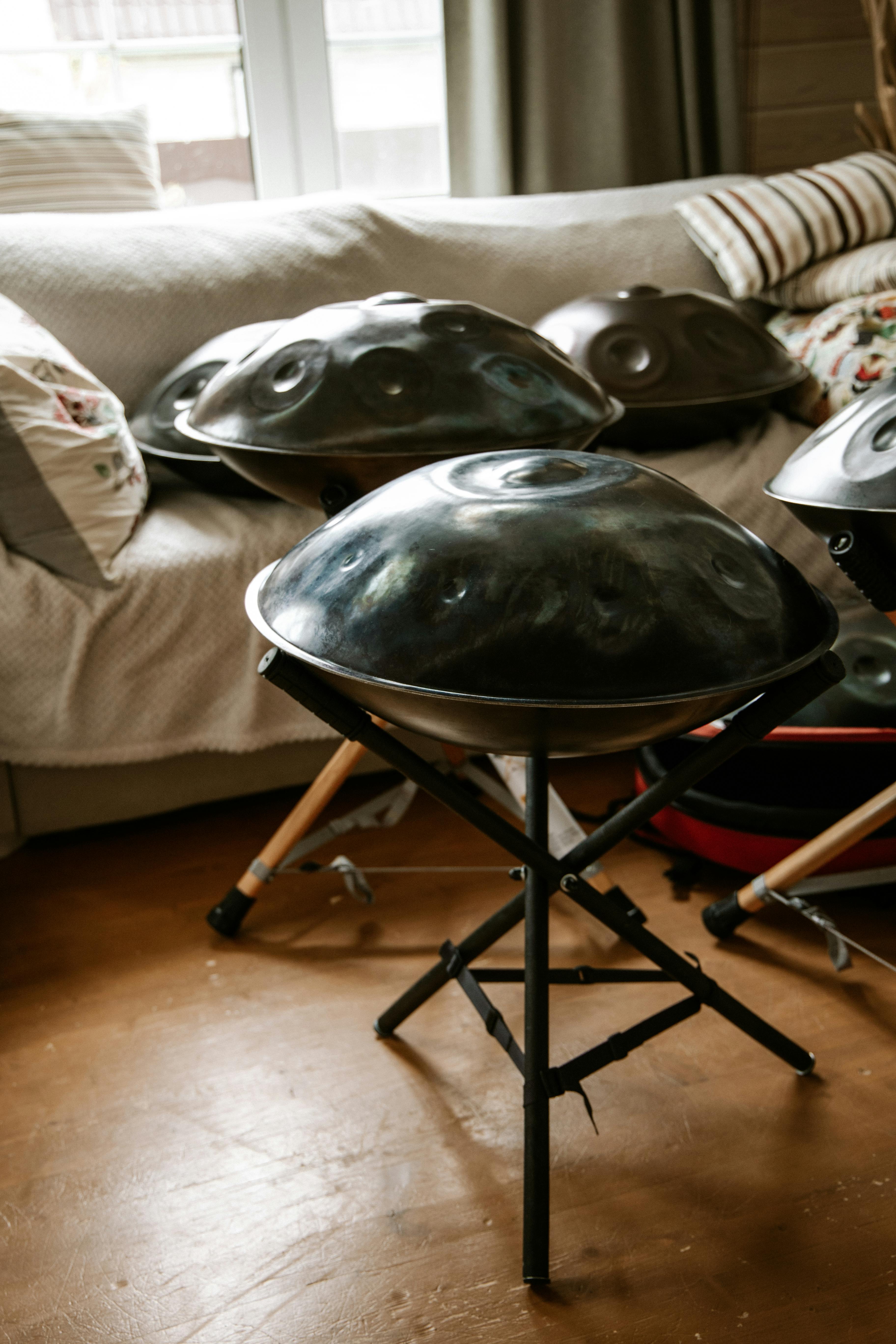
Nope. While the course uses a handpan to demonstrate musical concepts, you don’t need one to participate. The lessons are designed so you can apply the same principles using other sound healing instruments — like crystal bowls, tuning forks, or drums — and still get the full benefit of the training.
Intuitive Handpan:
Healing Music for the Soul
Learn to Play with Flow, Feeling, and Frequency
(No musical background needed — just an open heart)
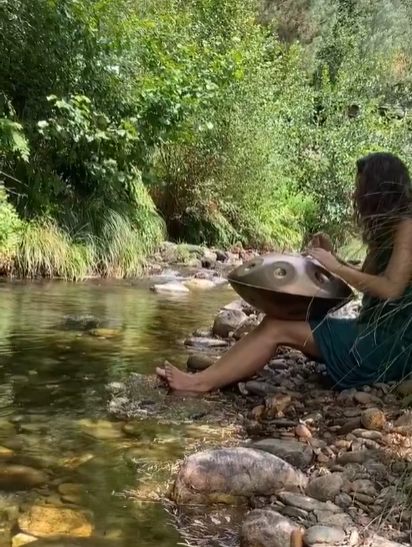
What if you could create music that heals you ... before you ever play for others?
There’s a reason the handpan has captivated hearts around the world — it’s not just an instrument.
It’s a portal.
A mirror.
A gentle, resonant reminder of the music that already lives inside you.
You don’t need years of training.
You don’t need to read music.
You just need your hands, your breath, and a willingness to feel.
Even if you’ve ever said things like:
- “I don’t have rhythm”
- “I’ve never played an instrument in my life”
- “What if I sound terrible?”
You can learn the handpan – You're not alone.
That’s exactly why Intuitive Handpan: Healing Music for the Soul was created — to break down the wall between you and your musical self.
The secret key is feeling, expressing, and reconnecting with your essence through sound.
And here's the beautiful thing:
Handpans are tuned so that all the notes work together — most are pentatonic or diatonic scales, which means you literally can't hit a wrong note. Even simple touches sound stunning
The Soulful Origins of the Handpan
Because it requires no sheet music or prior knowledge, the handpan invites people to connect with their intuition and feeling, rather than relying on mental constructs.
Many describe the handpan as sounding like a cross between a harp, steel drum, and singing bowl — yet unlike anything else.
The handpan was first created in 2001 by Felix Rohner and Sabina Schärer in Switzerland. They were inspired by the steelpan (from Trinidad and Tobago), gongs, gamelan instruments, and the physical and tonal beauty of the Indian ghatam. Their goal was to create an instrument that could blend melody, harmony, and rhythm into one intuitive experience — an instrument you could hold in your lap and feel through your hands.
What they developed was originally called the “Hang” (pronounced “hong”), meaning “hand” in the Bernese German dialect. It was a completely new acoustic invention — shaped like two convex steel bowls joined together, tuned to produce a central note surrounded by a circle of additional harmonically related notes.
Why It’s So Unique — and So Healing
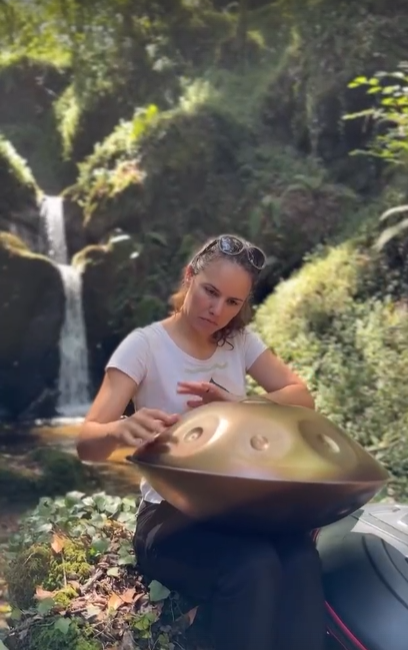
The handpan is often tuned in pentatonic or diatonic scales, meaning that every note harmonizes with the others. This is one of the reasons why it’s ideal for beginners and healers — even without training, the instrument produces a soft, soothing, and emotionally resonant sound.
Its design allows players to easily create:
- Gentle percussive rhythms
- Melodic lines
- Meditative, ambient textures
- Intuitive, freeform improvisation
While the handpan itself is fairly new, its purpose connects deeply with ancient sound healing traditions.
Cultures around the world have long used instruments — from drums and chimes to flutes and bowls — to alter consciousness, release emotions, support meditation, and deepen spiritual practice.
In that way, the handpan becomes a modern companion to ancestral tools — offering a new way to engage with healing through sound, energy, and emotion.
And perhaps that’s what makes it so special — the handpan doesn’t just produce music. It reflects your energy. It becomes an extension of your breath, your intention, your healing presence.
It’s not about playing the “right” notes — it’s about how you show up.
In silence, in curiosity, in joy, in grief.
Whether you're using it to hold space for others or simply for your own meditative self-care, the handpan offers something rare: a chance to create sound that feels like coming home.
So what does that journey look like?
Intuitive Handpan: Healing Music for the Soul
Your Journey Into Soulful Sound and Self-Expression Begins Here
Discover how to create healing music that flows from intuition — no theory, no pressure, just presence.
Module 1: Getting to Know the Handpan
-
Understand its unique tuning and healing potential
-
How to choose the right one (and avoid scams!)
-
Scales, craftsmanship, care and tuning explained simply
Module 2: Foundations of Playing
-
Posture and hand technique for beautiful tones
-
Center notes, tone fields, and first soothing rhythms
-
Learn to play with sensitivity and confidence
Module 3: Flow, Rhythm & Breath
-
Use breath to guide your playing and create rhythm
-
Learn calming, meditative loops
-
Practice rhythm as a grounding tool
Module 4: Intuitive Playing & Self-Expression
-
Let go of “doing it right” and begin to just feel
-
Trust your body and emotions to lead the music
-
Begin 3-minute daily flow practice
Module 5: Creating a Healing Atmosphere
-
Build short healing sessions for self or others
-
Use silence, tone, and pacing for deep calm
-
Blend with nature sounds, crystal bowls, or your voice
Module 6: Expanding Your Skills
-
Play with dynamics, harmonics, and textured tones
-
Add ambient loops or soft tracks for richness
-
Learn new ways to express your energy
Module 7: Sharing Your Sound
-
Reflect on your transformation
-
Develop a personal ritual and keep evolving
-
Learn how to play for others without fear of “performance”
Accredited by The Complementary Medical Association and Global Sound Practitioner Alliance
Official PDA continuing education provider for National Certification Commission for Acupuncture and Oriental Medicine (NCCAOM).
🎓 Certification + Lifetime Access
✔️ Lifetime Access — Learn at your own pace
✔️ 100% Online — Anywhere, anytime
Regular: $597
Today: Only $147 USD
Over 75% Off – Limited Time Only
Yes! I’m ready to play, heal, and express my soul through sound
Who This Is For
-
You've never played an instrument but feel drawn to the handpan
-
You're a healer, guide, or creative who wants to expand their sound tools
-
You want to heal yourself through music and connect to something greater
-
You're ready to express your soul — without needing to be “good” at music
If you’ve been waiting for a sign … this is it.
Healing doesn’t have to be complicated.
And your music doesn’t have to be perfect to be powerful.
All it takes is one moment of courage — to say yes to your voice, your rhythm, your resonance.
And that moment can be now.
Enroll in Handpan Today
Regular: $597
Today: Only $147 USD
Over 75% Off – Limited Time Only
Meet Your Guide
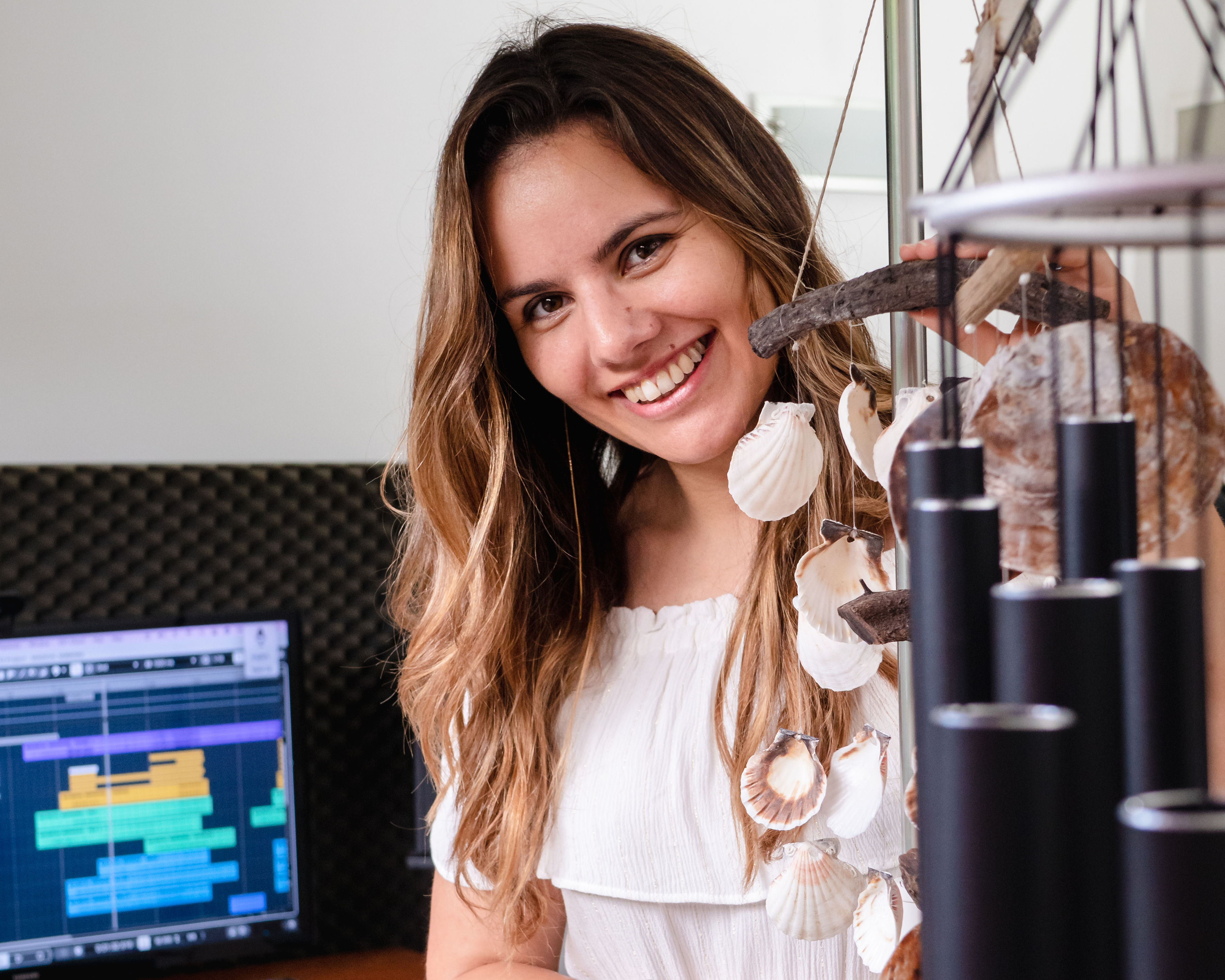
Fátima Teixeira
Fátima Teixeira is a sound healer, composer, and meditation music producer with over 20 years of experience in the music field. She taught in music conservatories for over 15 years, worked as a choral conductor, and played as a professional pianist in hotels and many venues. With a university degree in ear training, music theory, and conducting, Fátima blends her classical foundation with spiritual training in sound therapy, Reiki, and guided meditation to help others reconnect with themselves through frequency and presence.
Her work is rooted in creating emotionally resonant experiences using instruments like crystal bowls, tuning forks, and the handpan, one of her favorite tools for intuitive sound journeys and healing expression.
Frequently Asked Questions
How long do I have access to the course?
Lifetime! You can take it at your pace and do it according to your lifestyle and schedule.
What if I’ve never played handpan before?
Perfect! This course was designed with you in mind. You’ll learn everything step-by-step, with simple explanations, chakra-aligned concepts, and affirmations to help you build confidence.
How can I access the course content?
After enrollment, you'll get an email welcoming you and another with your login details. If you already have courses with us, you can access through your normal dashboard.
Do I need a handpan drums to take this course?
What if I’m not a “sound healer” yet — can I still take the course?
Absolutely. Whether you’re already offering sessions or just exploring your gifts, this course will help you build musical confidence and learn how to create meaningful sound experiences from the heart.
What’s the refund policy?
Because the entire course is available for instant download, we don’t offer refunds. We encourage you to read the full course details before purchasing and reach out if you have questions — we want you to feel great about your investment.
Who can I contact to ask more questions?
We're happy to answer your questions. Simply email us at support@lifechangingenergy.com
Why Now? Why You?
There’s something sacred about timing.
If the handpan has been quietly calling to you — in YouTube videos, sound baths, or dreams — this isn’t random.
You’re not too late. You’re right on time.
Your soul is ready to sing again — and this course is your invitation to finally begin.
Enroll in Handpan Today
Regular: $597
Today: Only $147 USD
Over 75% Off – Limited Time Only
Life Changing Energy™ is a DBA of Vickie Gould International, LLC — a spiritually directed company committed to global healing.
100% of profits support charitable healing initiatives, outreach, and community wellness. Thank you for being part of the energy that changes lives.

Questions? email support@lifechangingenergy.com
www.lifechangingenergy.com
Disclaimer: This site provides general information and discussions about health, wellness and related subjects. The information and other content provided by Vickie Gould International LLC and Life Changing Energy, or in any linked materials, are not intended and should not be construed as medical advice, nor is the information a substitute for professional medical expertise or treatment.
If you or any other person has a medical concern, you should consult with your health care provider or seek other professional medical treatment. Never disregard professional medical advice or delay in seeking it because of something that have read on this websites, our blog or in any linked materials. If you think you may have a medical emergency, call your doctor or emergency services immediately.
The opinions and views expressed on this website have no relation to those of any academic, hospital, health practice or other institution.